
Division for International Research and Educational Cooperation
Graduate School of Science and Faculty of Science , Tohoku University





Home > Voices from Alumni > IGPAS Alumnus Helps Combine Pokémon and Astronomy (Dr. Ramsey Lundock, Class of 2011)
Voices from Alumni
IGPAS Alumnus Helps Combine Pokémon and Astronomy (Dr. Ramsey Lundock, Class of 2011)
What do Pokémon and astronomy have in common? More than you might expect. Dr. Lundock, IGPAS, Class of 2011, shares his journey from Tohoku University to working on a one-of-a-kind exhibition now touring Japan.
The "Pokémon Astronomical Observatory" has finished its initial run at Sagamihara City Museum and is now touring cities across Japan, including Kakuda City near my alma matter Tohoku University. Here, I would like to share my experiences working on this wonderful project.
I am Ramsey Lundock (Ph.D. Astronomy 2011). My time at Tohoku University gave me the skills I needed to work on the "Pokémon Astronomical Observatory" Special Exhibition, where together with many Pokémon, you can study various visions of the Universe discovered over human history. In addition to the astronomy curriculum, I also took Tohoku University's Japanese classes so that I was able to participate productively in Japanese language meetings with The Pokémon Company and NHK Art. And thanks to the generous MEXT Scholarship, I did not need to work a part-time job to support myself during graduate school, thus had a little bit of free time to spend on my hobbies, including Pokémon.
Now I work at the National Astronomical Observatory of Japan (NAOJ), so I enthusiastically answered the recruiting call for the "Pokémon Astronomical Observatory." NAOJ assembled a great team, knowledgeable about both astronomy and Pokémon. The Pokémon franchise and astronomy are so vast that everyone brought a different set of skills. My areas of expertise were the Pokémon anime, manga, and trading card game, along with the Solar System planets. Other people brought skills related to the Pokémon console video games and smart-phone games, and on the astronomy side: galaxies, extrasolar planets, and observational equipment.
What most people will probably notice is how the various displays use different Pokémon to explain the different characteristics and mysteries of the stars and planets. But one of the things I enjoyed the most was the charts we made showing how far you could throw a Poké Ball under the gravity conditions corresponding to each planet. Those calculations exercised some parts of my brain I have not used in a while, and the results were surprisingly interesting.
I also did the English editing. Originally, I was only supposed to edit the astronomy text, but you need a final overall editor to check everything, make sure the styles match and that it all hangs together as a cohesive whole. I stepped up to fill that role, editing to make the tone consistent across all of the content.
The "Pokémon Astronomical Observatory" turned out to be a larger and more difficult project than we were expecting. I should not complain; our team member at Subaru Telescope in Hawaiʻi had to work across time zones and had a rougher time than I did. When I stepped into the completed exhibit getting ready for the grand unveiling, I just stood in silent wonder thinking, "We actually bloody pulled it off."
I hope that you get a chance to see the "Pokémon Astronomical Observatory" and knowing all of the hard work, by all members of the team, that went into its creation will help you enjoy it even more.
▶ ▶ Check the event details for the "Pokémon Astronomical Observatory" at Kakuda Denen Hall
(July 5-September 15, 2026): https://observatory.pref.miyagi.jp/pokemon/
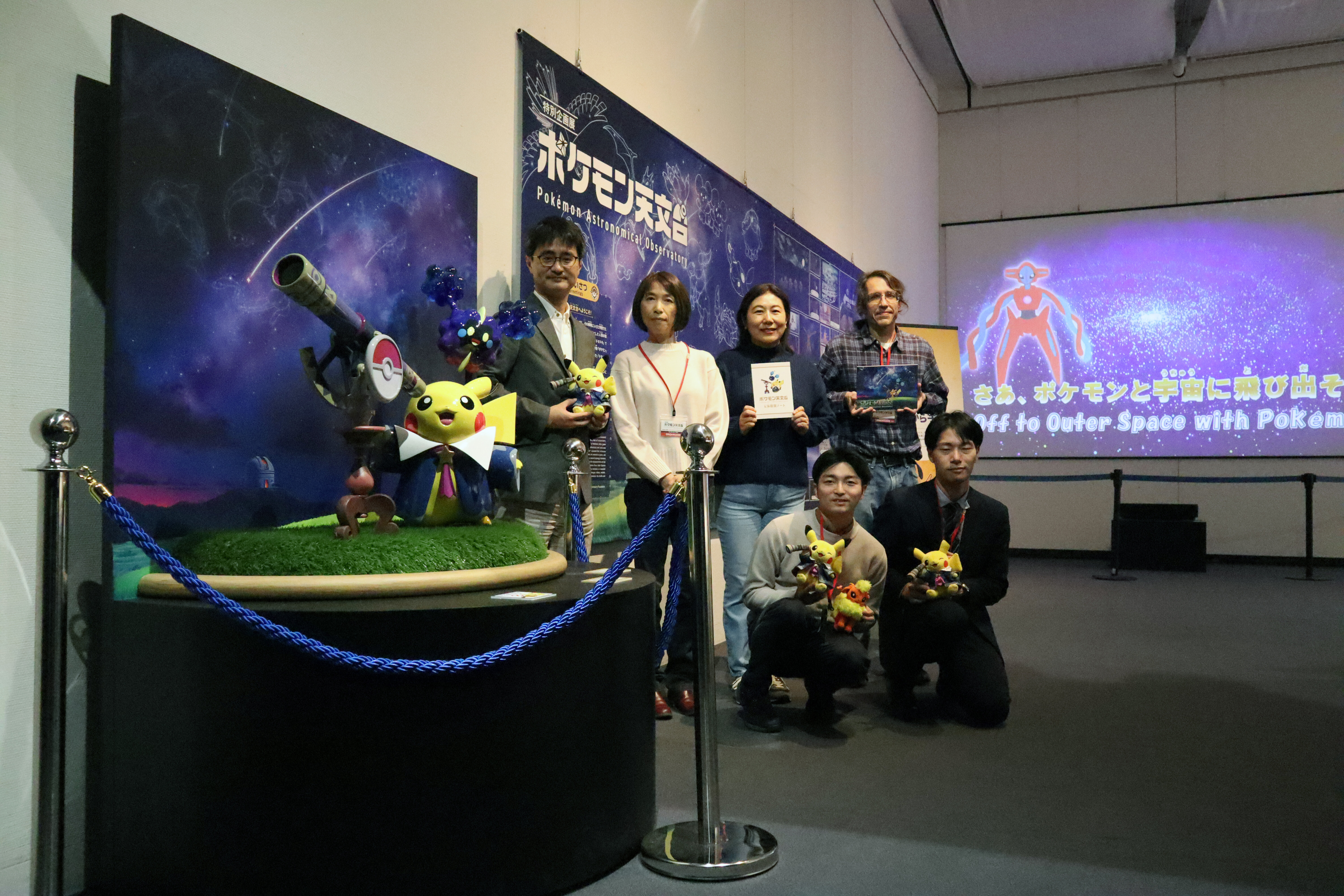
NAOJ's "Pokémon Astronomical Observatory" team (from left to right): (back row) Masaaki Hiramatsu, Tomoko Ono, Kumiko Usuda-Sato, Ramsey Lundock (author); (front row) Akitsugu Morita, Hidekazu Kashiwa. (Credit: NAOJ)
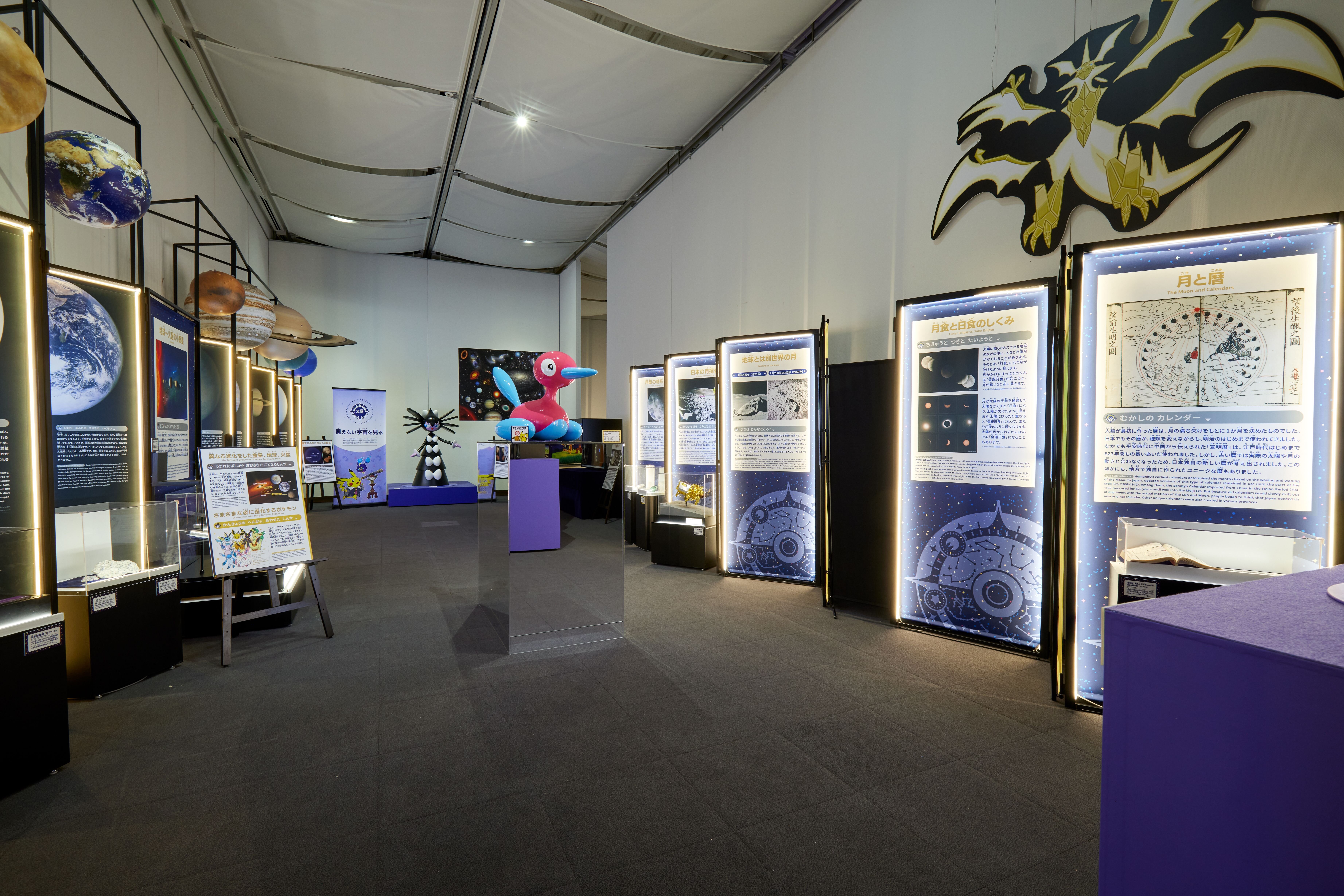
The completed "Pokémon Astronomical Observatory" Special Exhibition at Sagamihara City Museum.
©Pokémon. ©Nintendo / Creatures Inc. / GAME FREAK inc. TM, ®, and character names are trademarks of Nintendo.
Posted June 16, 2026