
Department
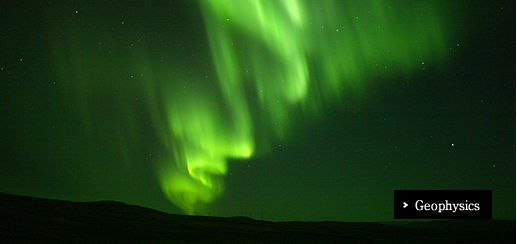
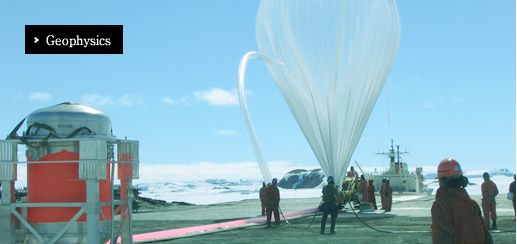
Geophysics is a vast academic field grounded in physics, encompassing not only the Earth but also various planets across the solar system. It explores phenomena of the solid Earth, the oceans, the atmosphere, and the space environments of planets.
Seen from space, the beautiful Earth shines quietly in blue, captivating the hearts of many people. Yet Earth is alive. Earth and other solar system planets exhibit dynamic natural variations across a wide range of scales, from earthquakes and volcanic eruptions to atmospheric and oceanic phenomena, auroras, and magnetic storms. The true fascination of geophysics lies in opportunities to study these majestic natural processes up close, while one senses pulses of the living Earth.
While natural phenomena are often praised for their grandeur and beauty, they can also cause unforgettable disasters -- such as the devastating earthquakes, extreme weather anomalies, and radiation hazards in space activities and planetary exploration. Moreover, signs of global warming caused by human activities have become evident. In confronting natural disasters and environmental challenges, geophysics is expected to play a vital role in society.
The Department of Geophysics (and the Geophysics Course) comprises four principal laboratories and three research centers, with approximately 50 faculty members. These laboratories and centers are loosely divided into three research fields: Solid Earth Physics (Field A), Atmospheric and Oceanic Sciences (Field B), and Planetary and Space Physics (Field C). They conduct education and research while closely collaborating with one another. In addition, faculty members hold joint appointments with the International Research Institute of Disaster Science (IRIDeS) and the Advanced Institute for Marine Ecosystem Change (WPI-AIMEC), thereby promoting cooperative research and education in natural disaster science and marine ecosystem variability.
Together with those interested in studying geophysics, we aim to explore the truths behind natural phenomena and contribute to building a better relationship between humanity and the natural environment.